
Master Deep Diver
Languages:
See publication


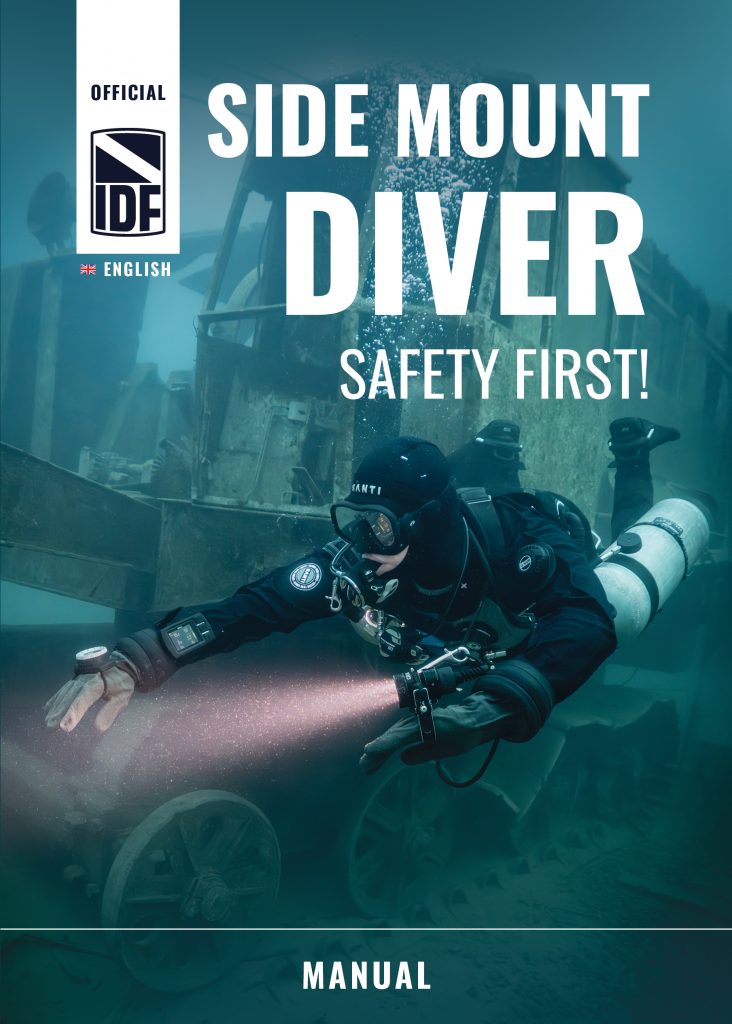



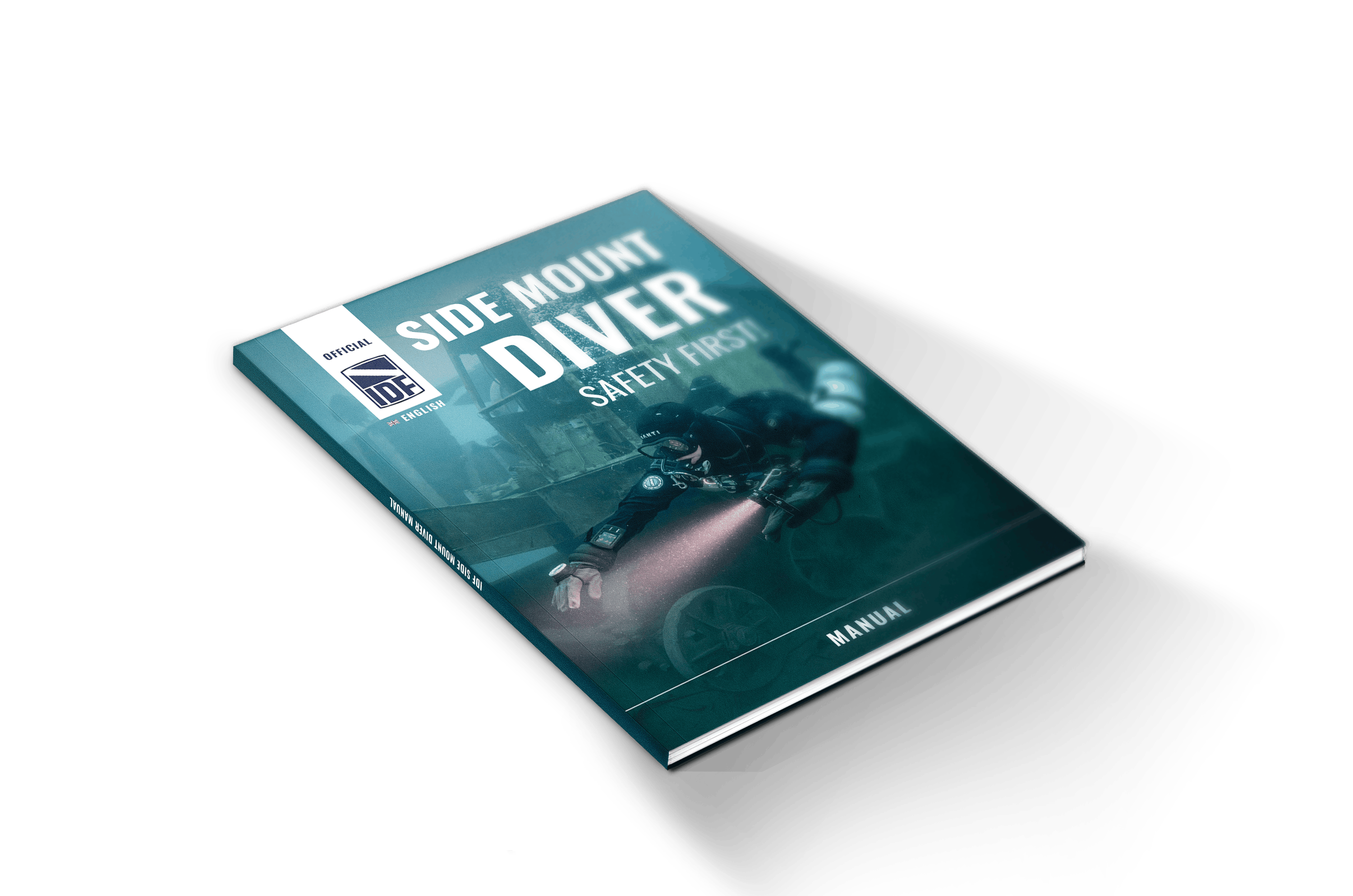
Imagine edging forward in darkness, your helmet scraping against the ceiling of cold limestone. At the same time, the only way forward is a gap just wide enough for you and a disassembled set of cylinders pushed ahead through the fissure. This was the reality faced by the pioneering cave divers of Europe in the 1960s. In this world, each piece of gear had to be slimmed down, carried separately, and reassembled deep within twisting passages sealed by underwater siphons and rock. In these conditions, the side mount configuration was born. Initially, it was a response to the challenges at the diving sites—usually siphons deep inside caves, with access blocked by narrow passages. In short, these were conditions that required the equipment to be disassembled into the lightest possible components for transport and, after reassembly, to be suitable for cave diving in confined spaces. So why has side mount won the hearts of divers—not only cave divers but also recreational divers—around the world over the last 20 years?
Side mount provides excellent equipment redundancy, as the cylinders are permanently separated in the event of a failure. This distinguishes the side configuration from the back mount, where, in the event of a failure, the diver must close the manifold valve to separate the cylinders and prevent the gas supply from being cut off by at least one of them.
Due to the cylinders’ position and the valves being within the diver’s field of vision, it is also easier to spot even a small leak, and emergency closure of any valve does not pose a problem even for people with significantly limited mobility.
Due to its origins, side mount also ensures convenient transport – the cylinders can be moved to the dive site and attached in the water without having to carry the entire set of equipment at once. This advantage will undoubtedly be appreciated by people with recurring back pain – a real scourge of our times.
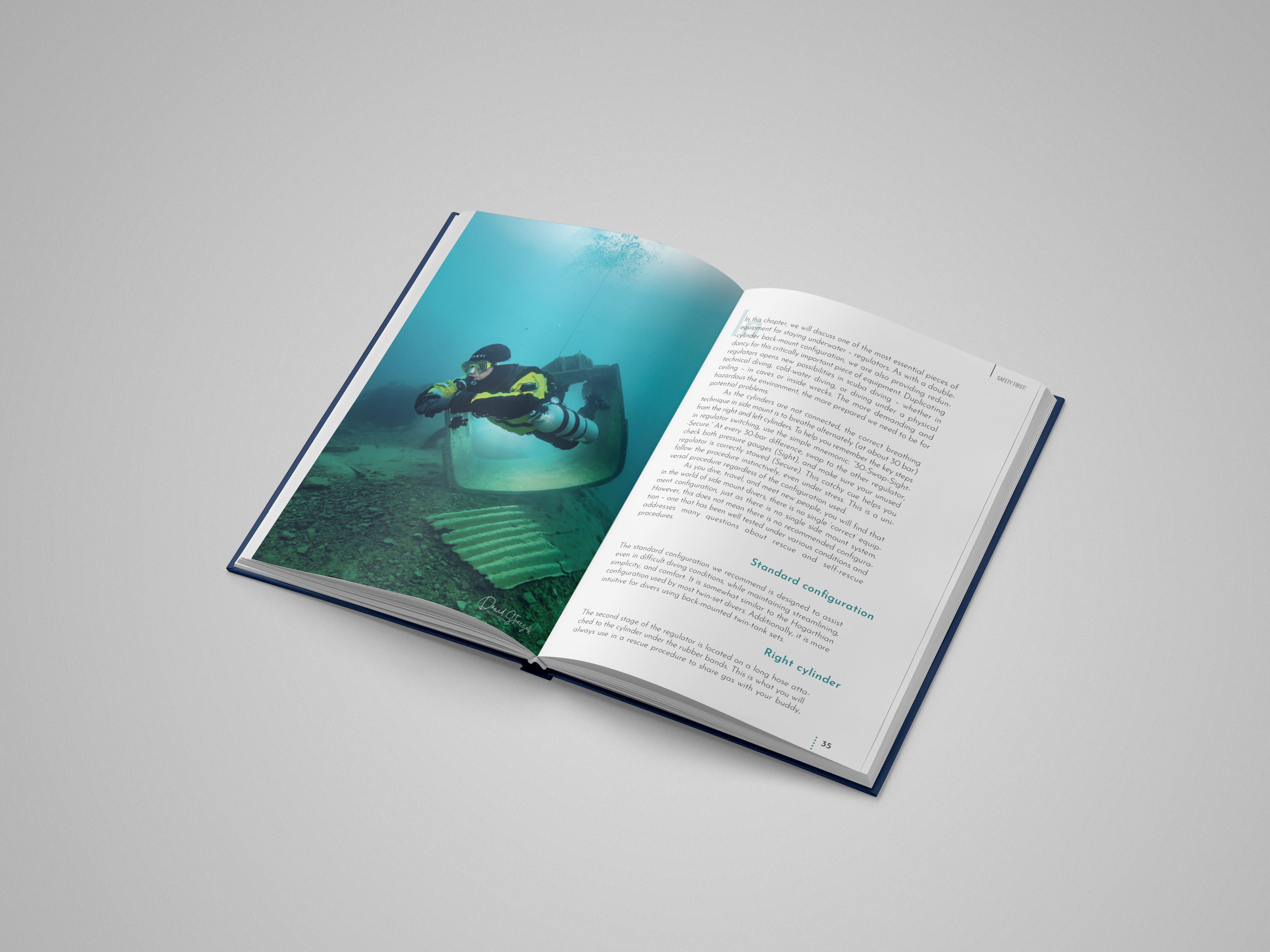
Side mount also offers advantages in the water – thanks to its optimal weight distribution and centre of gravity, it is the most stable of all configurations, allowing you to assume any position underwater. The cylinders, hidden within the diver’s outline, also make the silhouette more streamlined than in other solutions, which reduces hydrodynamic resistance and thus the exertion required to move.
Finally, it is worth mentioning that side mount has also become fashionable – a diver in this configuration looks more graceful, more professional, and more interesting than in the classic back configuration. Many people have decided to change their previous configuration to a side mount for various reasons – from efficient considerations to the not-so-temporary fashion. Some have stuck with side mount, others have returned to back mount. Still others – the most experienced divers – alternate between different configurations, choosing them depending on how and where they want to dive, following the principle that ‘the tool should be chosen for the problem, not the problem sought that can be solved with the tool at hand’ – which we strongly encourage you, the reader, to do.