“Should I take my diving course in Poland or abroad?” is probably the second most frequently asked question on Polish diving forums and groups, beaten to the top spot only by questions about buying a “small tank for an amateur” that could supposedly be filled with a bicycle pump. The frequency with which this question is asked shows that it is an important issue for beginners — and the answer is far from obvious. So let’s take a closer look, challenging or confirming some of the common opinions, and focusing on entry-level courses. We’ll deal with advanced courses in another article.
MYTH #1 – You won’t learn anything in the tropics
The common belief is that if you take a course in the tropics (because that is usually what people mean by “abroad” in this context – it is rather unlikely that someone would ask whether taking a course in Iceland makes more sense than doing one in Poland), you will only be dipped into the water for a few moments, like a Lipton tea bag in a cup, and you won’t learn anything.
Really?
The undeniable fact is that warmer water allows for longer training dives than colder water. A longer training dive means more time getting comfortable in the water and with the equipment, as well as more practical exercises.
Most diving federations set 25 minutes as the absolute minimum duration of a training dive, as specified by their Standards. This time comes directly from the standards of the Recreational Scuba Training Council (RSTC), which all federations try to follow, regardless of whether they have chosen to join the RSTC for business reasons or not. In practice, this means that an instructor conducting a course cannot spend less than 25 minutes with you underwater during each dive, but there is nothing formally preventing them from spending longer. This has nothing to do with geographical location. The actual length of a dive depends only on thermal conditions, available gas and… the size of the training group. I won’t say anything revolutionary by pointing out that it is easier for an instructor to spend 60 minutes underwater with a single student when they have three dives to conduct in a day than to do the same with eight students. Warm water simply makes it easier.
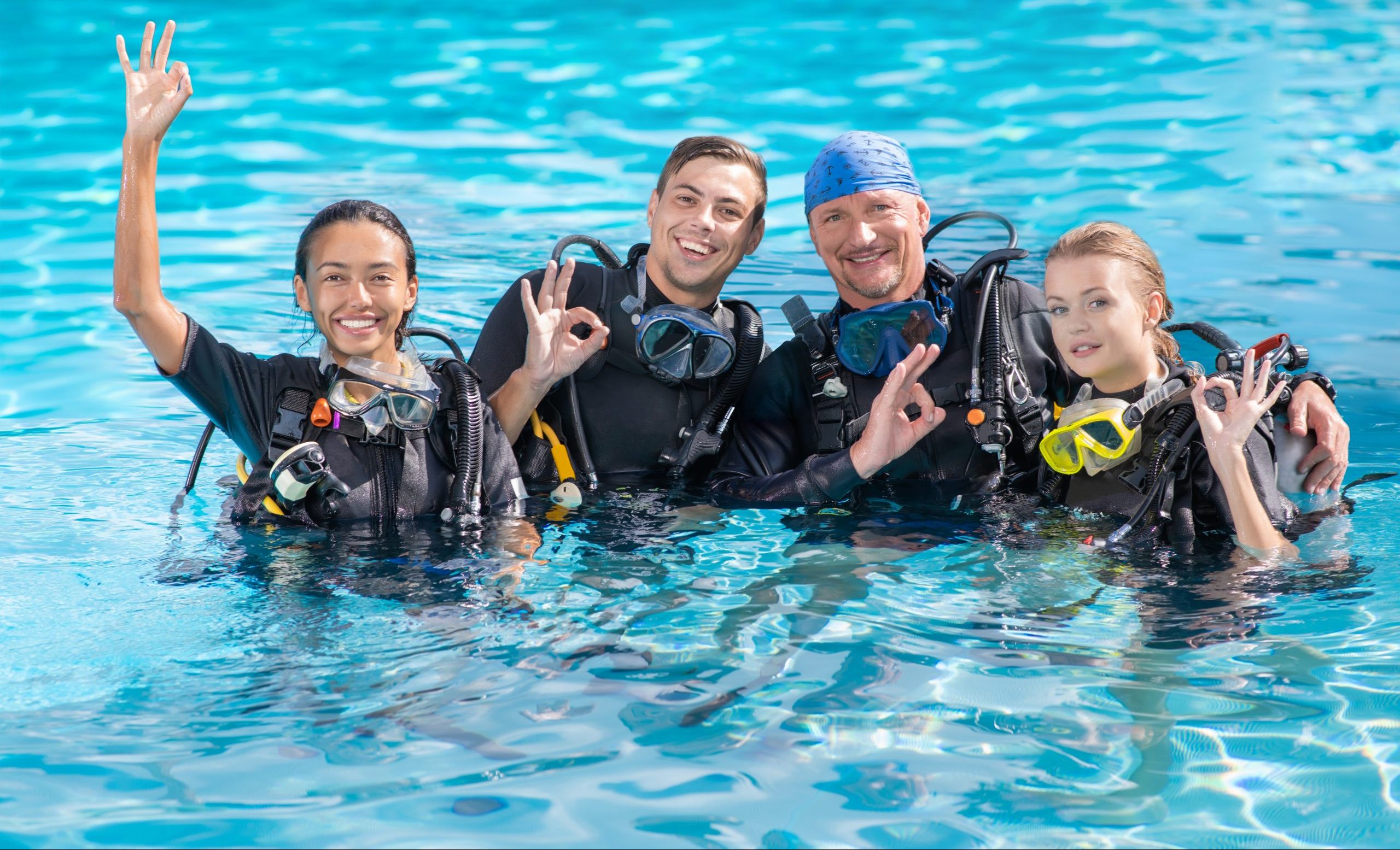
Unfortunately, finding a dive centre in the tropics offering individual courses or courses conducted in small groups is often not easy, especially if you are travelling during peak season. One solution is to join Polish instructors who organise diving trips abroad, where you can complete the full Open Water Diver course (or just the open-water dives after completing the pool portion of the course in Poland).
This approach has several advantages:
– You learn in your native language. Even if you speak perfect English, you probably don’t know the specific vocabulary associated with diving.
– You gain your own regular diving “crew” that you can travel with on future diving trips.
– You have continued access to instructor support, not only underwater but also after the course has finished. Some symptoms of diving-related illnesses and injuries do not appear immediately after leaving the water.
MYTH #2 – Only divers trained in dark water can cope in any conditions
At this point, I always think of the popular joke about the blind horse that won a steeplechase because it “couldn’t see the obstacles.” While the ability to dive in limited visibility certainly has its value, it is difficult to agree that it is an absolutely essential skill for a beginner diver. I would put skills such as buoyancy control, performing a safety stop “in mid-water”, rescue and self-rescue procedures, recognising and avoiding dangerous aquatic life, and dealing with currents much higher on the list.
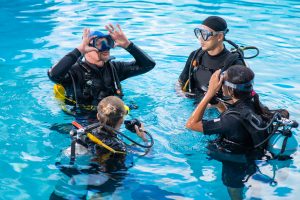
Although rescue and self-rescue exercises can be practised very effectively – and sometimes extremely realistically – in difficult conditions, the basic problem with training conducted in limited (and sometimes extremely limited) visibility is that dives often take place right next to the bottom. That is generally something you can practise successfully as long as the bottom isn’t tens or hundreds of metres below you – and places like that are by no means rare in the tropics.
MYTH #3 – Courses in Poland are taught using outdated methods
These days, international diving federations pay a great deal of attention to training standardisation. This means that regardless of whether you take a course under a particular federation in Poland, Egypt or Mexico, you should receive the same body of knowledge and skills. All major international training agencies provide standardised manuals – printed or electronic – as well as multimedia presentations and audiovisual materials. Only a few federations that take a more old-fashioned approach to teaching fail to provide these resources.

Training materials make the learning process easier and ensure that, regardless of where your course takes place, you receive exactly the same information. This means that both in Poland and in the tropics you will find many instructors who do an excellent job, following the latest knowledge and current trends in diving. Poland also has many excellent training sites, equipped with underwater platforms, obstacle courses, and other useful infrastructure. Since natural underwater features are not always available, these facilities have been created as training grounds for divers.
So does this mean that courses in Poland are always bad and courses in the tropics are always good… or vice versa? Absolutely not!
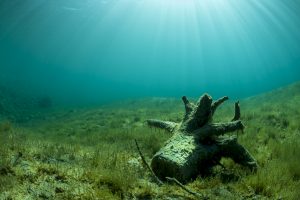
The so-called “good diving practice” – an unwritten set of principles that a responsible diver should follow – says that when you encounter diving conditions that are new to you, you should seek the assistance of someone more experienced. This principle is reflected in the Statement of Understanding of Safe Diving Standards signed at the beginning of a course. One of its points states that you should only dive independently – more precisely, together with a buddy – in conditions in which you have been trained. In all other situations, you should use the services of a local dive centre and rely on the knowledge and experience of a local guide.
This principle works both ways. A diver trained in Poland may not have experience diving in currents, may never have encountered dangerous marine life such as scorpionfish in real life, may not have received practical boat-diving training for logistical reasons, and may not be comfortable with “mid-water” diving.
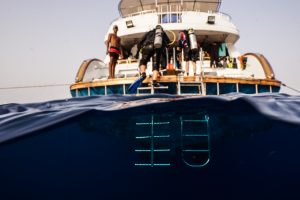
On the other hand, for a diver trained in the tropics who has never dived in a thick exposure suit, encountered a thermocline, dealt with sediment rising from the bottom, or experienced darkness beginning at a depth of just a dozen metres or so, heading out for an independent dive in Lake Hańcza would seem, to put it mildly, unwise. They too should seek competent, professional assistance.
Okay, enough theory. Where should I take my course?
You probably remember from school that the teacher is the most important part of learning. Diving is no different. Choosing the right instructor can determine whether you continue diving for many years or give it up almost immediately. It is worth considering other people’s recommendations, but you should also trust your own intuition. If your initial conversation with an instructor leaves you with the feeling that you are simply not “on the same wavelength”, or if you don’t trust them… find another instructor. For recreational diving to be safe, it should also be enjoyable and stress-free.
Just as important as the teacher is choosing the right moment. And here I would like to make one thing absolutely clear: Any moment is the right moment.
If you feel that diving is “your thing”, find a good instructor near you and start diving. It doesn’t matter whether you are currently in the tropics or in Sosnowiec.
If you’re not sure whether diving is “your thing”, but you would like to give it a try, find a good instructor near you and start diving. It doesn’t matter whether you are in the tropics or at home.
I regularly meet people on courses who tell me that they have been planning to start diving for years, but… they never had the time.
Don’t wait. Start diving. It’s later than you think. 😊
About the author:
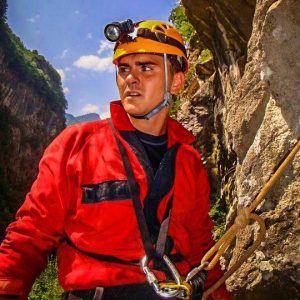
Sebastian Dobrowolski – CEO and co-founder of IDF. Course Director and cave and technical Instructor Trainer, involved in diving since the age of 10. Co-founder of Calypso. Author or co-author of most IDF training materials. A lover of mountains, Monty Python, and martial arts. In diving, just as in other areas of life, he particularly values places that are difficult to reach – both little-visited tropical reefs and caves that remain unknown to the wider diving community. When he is not diving, he enjoys travelling with a backpack to places where charter flights are not an everyday occurrence and the sight of a tourist still causes some surprise.