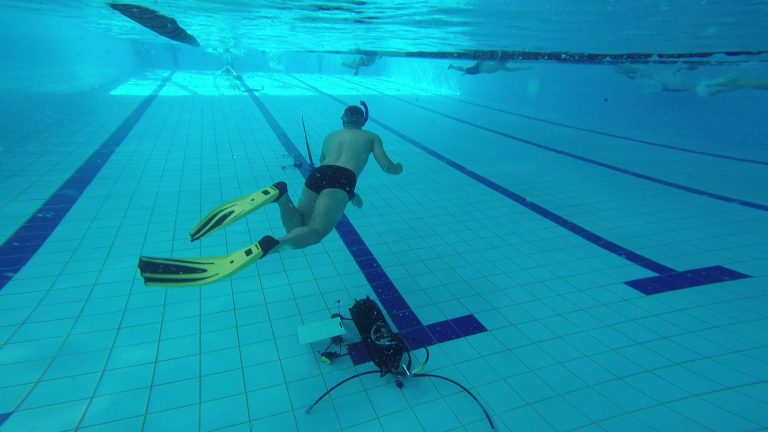
Can a person with a disability go scuba diving? Adaptive IDF shows that the answer depends not simply on disability, but on individual abilities, safe qualification, appropriate training, and a properly prepared dive team.
What happens when experienced divers stop talking about achievements and start talking about panic, mistakes, and failures? A personal story from the first IDF camp – and a different perspective on what makes someone worth learning from.
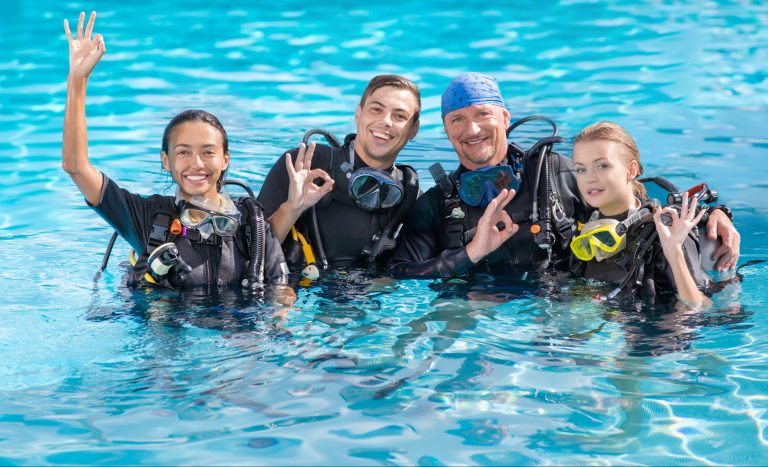
Scuba diving is an increasingly popular activity practiced by many people around the world. How to start this fascinating adventure in the easiest way, you will learn from this post.
In winter, many divers hide their wetsuits, give their cylinders to be legalized, and the remaining equipment is serviced or waits for warmer days. The frequency of diving trips drastically decreases due to weather conditions. So what should people do who do not necessarily associate winter with diving, but still want to enjoy their favorite activity?
300-bar cylinders are an excellent alternative for those divers who want a larger gas supply without increasing cylinder size. But is that really the case? On paper, everything looks pretty good. However, let’s take a closer look….
At every dive site in the world, whenever unforeseen difficulties arise, divers face a dilemma, to dive or not to dive? We will try to answer this question.
The question in the title is probably the second most frequently asked question on Polish diving forums and groups, beaten to the top spot only by questions about whether it is possible to buy a “small tank for an amateur” that could be filled with a bicycle pump. The frequency with which this question is asked shows that it is an important issue for beginners, and the answer is far from obvious.
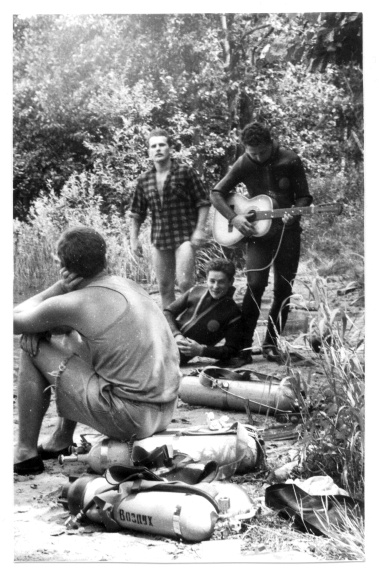
In the next article in the Women Diving series, I would like to go back in time and introduce some of the amazing female pioneers. Unusual activities and more extreme forms of recreation have always attracted equally unusual people. However, we must remember that diving did not start as a form of sport or leisure activity, for the beginnings were decidedly more pragmatic – from commercial diving through navy divers. I will immediately point out that the figures you will read about in this text are not a closed set. I also encourage you to search for more remarkable women who have written their chapter in the history of diving.
Sylvia Earle is the first woman to steer a bathyscaphe, the first to hold the position of chief scientist at NOAA, spent two weeks in an underwater research habitat in the 1970s leading the first all-female mission, and walked 2.5 hours on the ocean floor at a depth of 380 meters – all to learn and protect. Sylvia Earle has always believed that people need to learn about the underwater world in order to love it, and thus protect it.
How to talk about women’s diving? What kind of narrative can convey this incredible divergence of expectations and preferences, while not falling into clichés or infantilizing such a diverse environment? How does one not reduce the subject of diving women to taking care of hair and nails while diving? A few words about women in diving and the narrative surrounding them.
What books are worth reaching for when winter arrives, evenings get longer and longer, and diving equipment goes into the closet? Let’s dive into diving reading from the comfort of your armchair!
Closed swimming pools, travel bans, restrictions, quarantines. You can go crazy, especially since we start the new year with an epidemiological problem. For us – divers and instructors, or all other active people many of these restrictions are extremely tiring. How not to go crazy, not to end the pandemic with a record score on the scale and the need for rehab? Our reliable office has some advice for you!
Is teaching others just for instructors? Do they have the exclusive right to develop habits, approach to water as an element, teaching the appropriate procedures, showing the correct configuration of the equipment? Finally are they solely responsible for what path of development this ever-growing community of recreational and technical “scuba divers” will take?
Manage consent
To provide you with the best possible experience, we use technologies, such as cookies, to store and/or access information about your device. Consenting to these technologies will allow us to process data, such as browsing behavior or unique identifiers on this site. Failure to consent or withdrawal of consent may adversely affect certain features and functions.
Functional
Always active
Storage of or access to technical data is strictly necessary for the legitimate purpose of enabling the use of a specific service expressly requested by the subscriber or user, or for the sole purpose of carrying out the transmission of a message over an electronic communications network.
Preferences
Storage or technical access is necessary for the legitimate purpose of storing preferences that are not requested by the subscriber or user.
Statistics
Technical storage or access that is used exclusively for statistical purposes.Technical storage or access that is used solely for anonymous statistical purposes. Without a subpoena, voluntary compliance from the ISP, or additional records from a third party, information stored or retrieved solely for this purpose usually cannot be used to identify you.
Marketing
Storage or technical access is required to create user profiles for the purpose of sending advertisements or tracking a user on a website or on several websites for similar marketing purposes.