


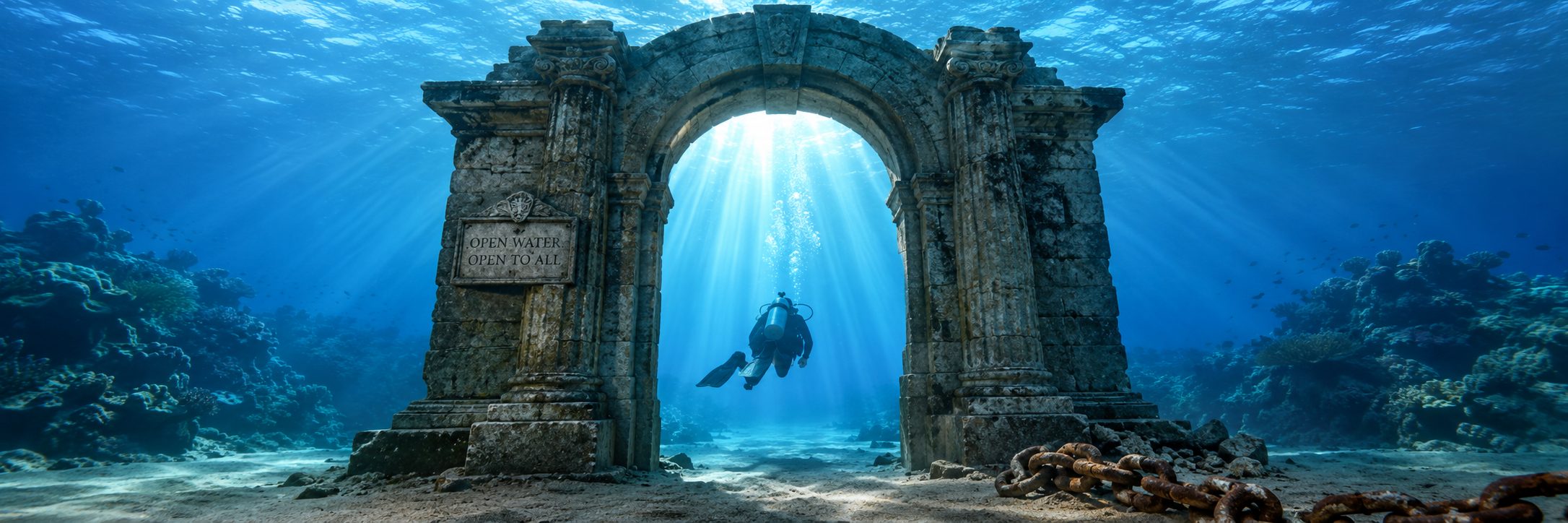
Adaptive IDF – Diving Without Barriers | Part 1
People who are looking for information about diving with a disability for the first time usually ask one question: “Can I actually dive?”
The answer they most often find is “it depends” – and that is where the explanation ends. It is unclear what it depends on, who makes that decision, and what needs to be done to find out.
This series is here to answer that question clearly and concretely.
Underwater, the rules change
Underwater, many differences lose their significance. The weight of the body disappears, the way we move changes, and seemingly simple activities have to be learned all over again. Every diver – regardless of physical ability – has to trust their equipment, trust their buddy, and master the skills needed to remain safely underwater.
This is one of the reasons diving can be a space of genuine equality. Gravity no longer works the way it does on the surface. Movement takes on a completely different form, and some of the barriers that determine what is and is not accessible in everyday life simply dissolve.
But this does not happen automatically. It requires training that takes the individual person into account.
We don’t adapt the person to the course
The Adaptive International Diving Federation program was created from the belief that access to the underwater world should not depend on whether a person moves, sees, hears, or communicates in what is considered a standard way. It should depend on their abilities, motivation, safe qualification, and the appropriate preparation of the team.
We adapt the training to the person.
The idea grew out of practical experience – the work of the Mniejszy Błękit Foundation and diving activities conducted with people with disabilities. Over time, it became clear that individual workshops and events were not enough. What was needed was a complete system: one that did not end with an introductory dive or a single certification, but allowed divers to continue progressing.
That is how the Adaptive IDF pathway was created.
Adaptation Does Not Mean Lowering Standards
There is a common misconception that adaptive diving training means skipping more difficult exercises or lowering the requirements.
The opposite is true.
The goal of the training and the required level of safety remain unchanged. What can change is the way that goal is achieved.
If a student cannot perform a skill using the traditional technique, the instructor looks for a solution based on the person’s actual abilities. This may mean a different position in the water, a different equipment configuration, a different method of communication, a different division of tasks, or a different movement technique.
So instead of asking, “What can’t this person do?”, we ask:
“How can they perform this task safely, consciously, and effectively?”
This has a direct impact on the student: an Adaptive certification is not a certificate of participation. It confirms genuine skills acquired through a different approach.
Solutions are not selected based on the name of a disability. Two wheelchair users may have completely different physical abilities. Two blind divers may prefer different methods of communication. Someone may need support underwater while being perfectly capable of handling theory, planning, and equipment independently.
That is why everything starts with a conversation – and the best source of information about the support a diver needs is the diver themselves.
Your Certification Shows What Kind of Team You Can Dive With
One of the most important elements of the system is the way the certification describes the support a diver requires.
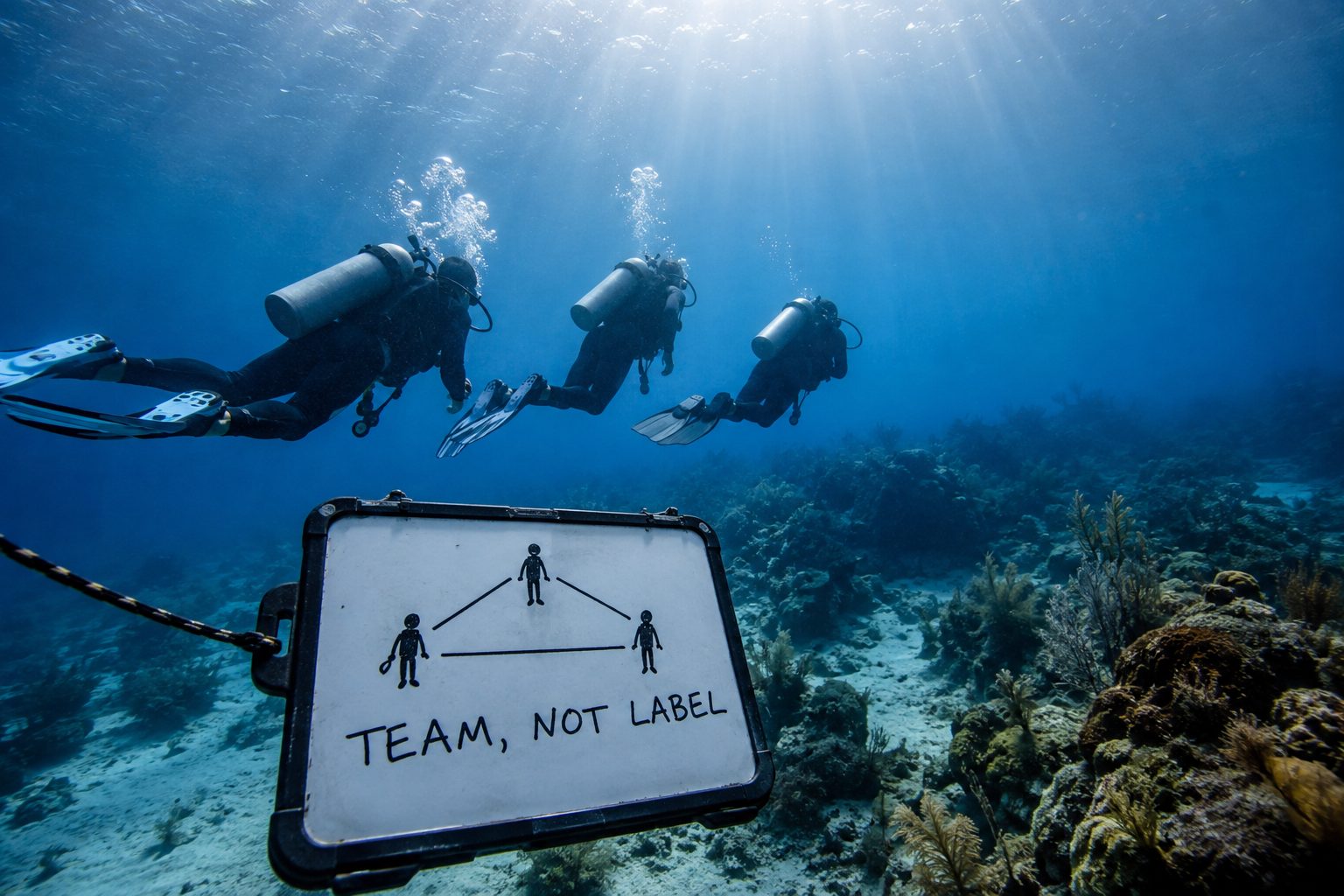
It is not an assessment of a diver’s worth or a classification of the “severity” of their disability. It is information for the dive operator about what kind of team a particular person needs to dive safely and comfortably – how many buddies are required and what qualifications they should have.
This is an important change in perspective. We do not decide whether someone “can” or “cannot” dive based on what we can see. We determine what kind of team they can safely dive with.
For the student, this means one thing: when they arrive at a dive center with an Adaptive certification, they do not have to explain their disability from scratch or negotiate whether they will be allowed into the water. The answer is already stated on the certification card.
We will return to how this system works in a separate article – it is a topic that deserves a full explanation.
This Is Not an Attraction. It Is Diving.
Adaptive diving is not charity work or a one-off event organized “for people with disabilities.”
It is simply – or perhaps most importantly – diving.
It requires learning, consistency, responsibility, knowledge of equipment, buoyancy control, and the ability to work as part of a team. It also brings exactly the same emotions: curiosity before the first descent, stress while learning new skills, the satisfaction of mastering them, and the joy of discovering places that cannot be seen from the surface.
It also has continuity. The Adaptive IDF pathway does not end at the first level – it leads through specialties and advanced levels all the way to deep diving, and for some divers, even to training others. A person with a disability does not receive a “special version” of diving at IDF that is limited to the swimming pool. They are given a pathway forward.
Safety is not in conflict with this. It begins long before entering the water: with a conversation, selecting the dive site, preparing the equipment, and establishing communication methods. But properly understood, safety does not mean telling someone, “It’s better not to try.” It means creating conditions in which they can try consciously and responsibly.
Diving Is for Everyone – But Everyone Needs Something Different
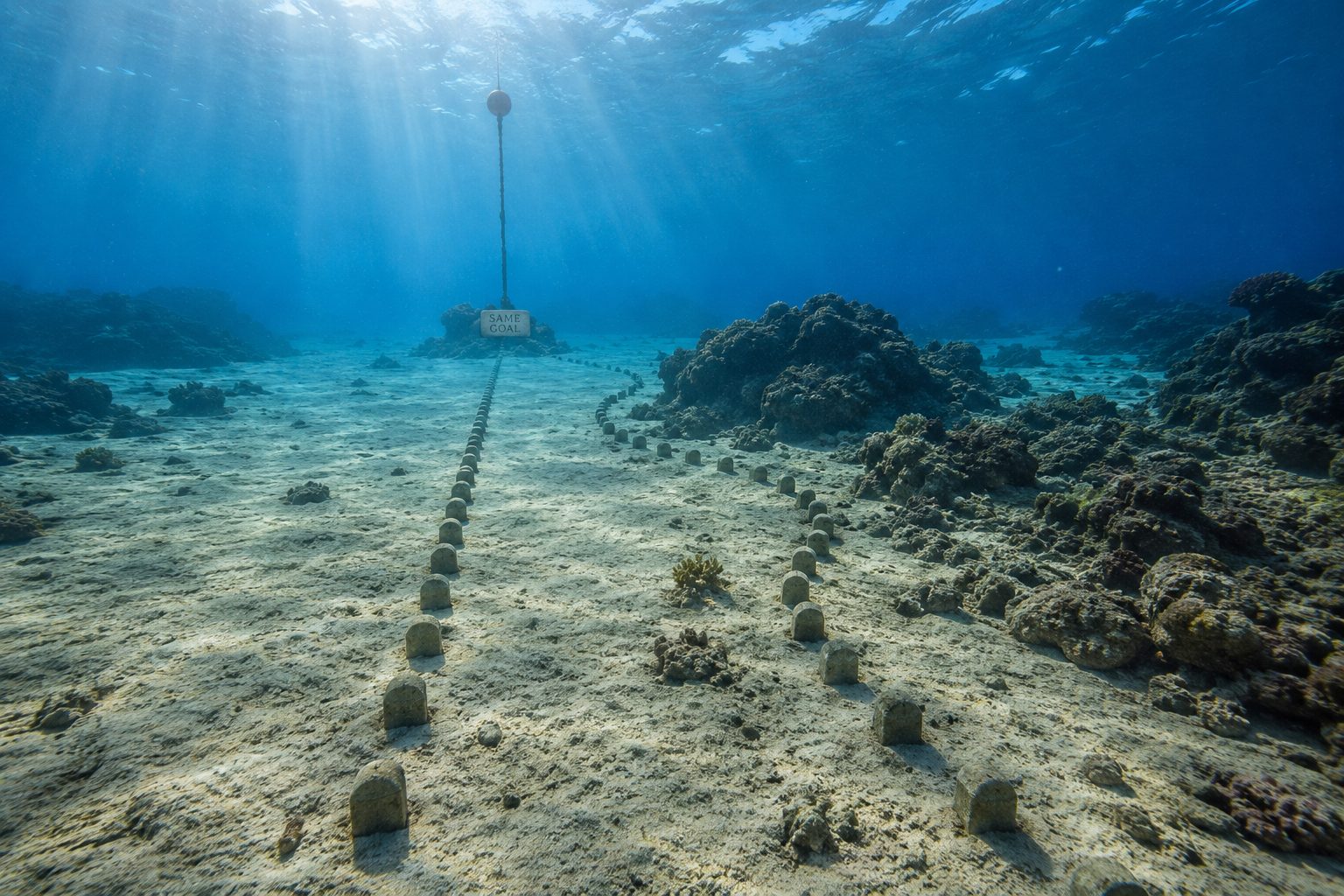
There is no single universal way to train all people with disabilities – just as there is no single way to train all other divers.
Adaptive means being ready to listen and look for solutions. It also means respecting independence. Assistance does not mean doing everything for the diver. Its purpose is to enable them to do as much as possible independently and, where necessary, provide professional support.
A disability does not define a person’s ambitions. It does not tell us whether someone dreams of relaxed reef dives, underwater photography, wreck diving, descending to forty metres, or passing their knowledge on to other students.
A training program should allow people to develop those ambitions rather than defining their limits in advance.
Underwater, We Are All Divers
Underwater, what remains is breathing, space, movement, and a team of people who know how to rely on one another.
That is why, at IDF, we believe diving is for everyone who can safely participate in it.
Sometimes a different technique is needed. Sometimes modified equipment. Sometimes an additional buddy or a more experienced team. Good training, responsibility, and mutual respect are always essential.
Adaptive IDF does not promise diving without limitations. It provides the tools to avoid creating limitations where they are not necessary.
Without lowering standards. Without taking away independence. Without giving up on dreams.
This is the first article in the “Adaptive IDF – Diving Without Barriers” series. In the following parts, we will show what the training pathway looks like step by step, explain exactly what the designation on the certification means, and discuss how a safe team is built. We will also share the stories of divers with disabilities who go on to train others themselves.
If you are wondering whether diving is right for you – get in touch with us. There is no cost to having a conversation, and every Adaptive training journey begins there.
Author: Konrad Kępka
