


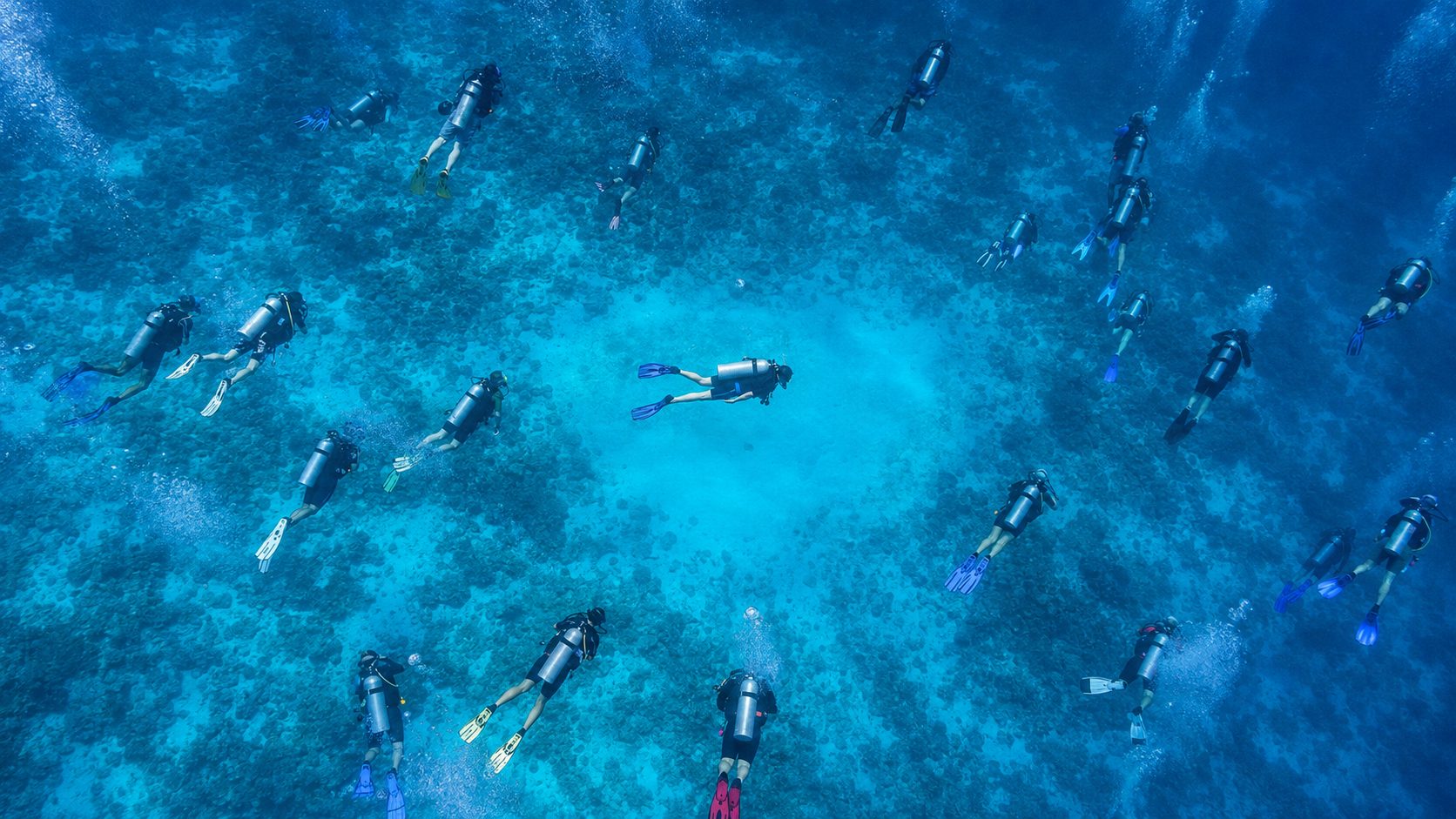
Solo diving is one of those subjects where the discussion often ends before it has properly begun, because merely saying the word “solo” is usually enough for someone to point out that diving should take place within the buddy system. It is difficult to disagree, at least until we begin asking the less comfortable questions about what that buddy system looks like in practice, what it actually involves, and whether the person swimming several metres away is genuinely our buddy or simply another diver who happens to be in the same part of the water.
In diving, we are often eager to believe that a buddy solves problems: they carry additional gas, notice failures, assist with navigation, free us from entanglement, support us during the ascent and generally appear at precisely the moment they are needed. It is a very good plan, provided that the buddy knows where we are, notices the problem, understands it correctly, knows how to respond, can reach us, has enough gas remaining and is not, at that particular moment, busy saving themselves. In other words, the system works perfectly as long as all its assumptions prove correct at the same time and reality politely agrees to follow the arrangements we made before entering the water.
We are not encouraging solo diving, because in the vast majority of situations a properly functioning buddy system remains the safer option. A second diver provides additional resources, mutual observation, shared decision-making and the possibility of assistance in a situation that would be difficult or impossible to manage alone. The problem begins when we assume that the mere presence of another person means we have received all these benefits automatically.
A buddy is not some magical property of water that transforms two people into an effective team simply because they entered it at roughly the same time.
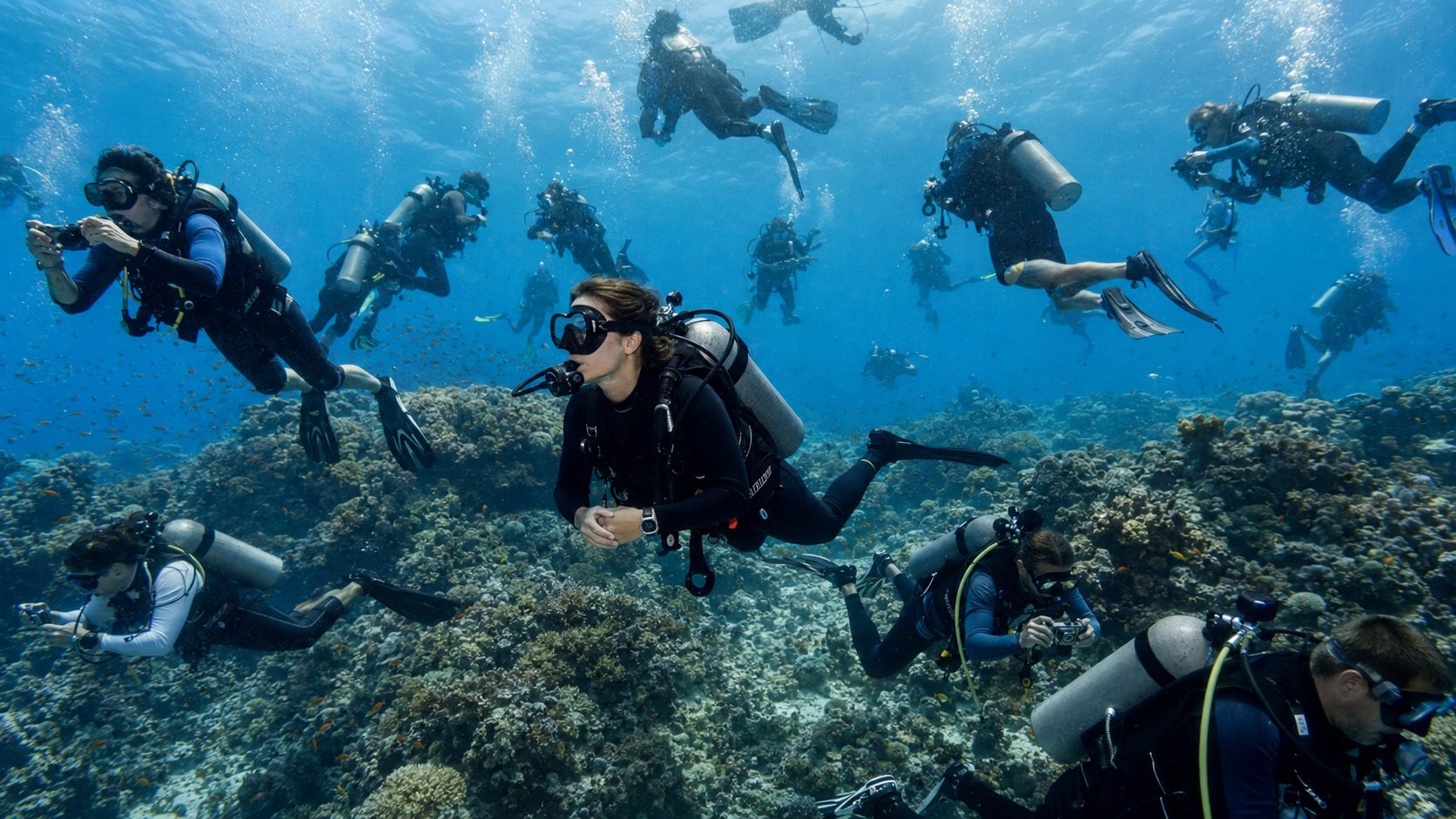
Two divers or one safety system?
Two divers who are completely dependent on each other do not create two independent safety systems; they create one system divided between two people. If each assumes that the other will provide emergency gas, find the way back, manage a failure, make the right decision and ensure a safe ascent, then the second diver is not an additional layer of protection but a missing component of the basic plan.
This is why, at IDF, we believe that two self-reliant divers working together are safer than two divers who each expect the other to rescue them if something goes wrong. Self-reliance does not mean ignoring your buddy, abandoning teamwork or embracing the romantic belief that a “real diver” needs nobody. It means being capable of controlling the situation, managing gas, navigating, responding to foreseeable failures and ending the dive safely without assistance, so that when a problem occurs, the diver can first stabilise their own situation and then provide meaningful help to someone else instead of immediately becoming the next casualty.
A good team is therefore not made up of two halves of a single safety system, but of two fully capable divers for whom cooperation is an additional safeguard rather than a condition of survival.
The solo dives we do not call solo
At this point, it is worth taking an honest look at professional diving, because an instructor conducting a course or a divemaster leading a group may formally be underwater with other people while, from the perspective of their own safety, functioning very much as a solo diver.
Of course, we can agree to call the instructor and student a buddy team, complete a buddy check together and immediately feel that we are operating as a perfectly coordinated unit. It is difficult, however, to overlook a slight imbalance: one of these buddies is expected to solve the other’s problems, while the other is still learning how not to create new ones. An instructor must be prepared to assist the student, but assuming that the student will be equally capable of helping the instructor in a serious emergency would be less a buddy system than an exceptionally optimistic rescue plan. There is also the entirely separate matter of the student having paid the instructor to keep them safe, rather than the other way around.
The situation is similar for a divemaster leading a group, because it is the divemaster who observes the participants, manages the dive, monitors the plan and responds to emerging difficulties. It would be rather optimistic to expect a randomly assembled group of recreational divers to monitor the divemaster’s condition with equal attention and remain prepared to provide effective assistance. At least, there is little evidence to suggest that this particular element of the briefing enjoys widespread popularity.
Formally, these are team dives, but functionally, a dive professional should be prepared as though assistance from the people in their care were unavailable. This does not mean that students or group members cannot help or should not pay attention to the professional, but building the professional’s safety around the assumption that they certainly will do so would be difficult to describe as either professional or responsible planning.
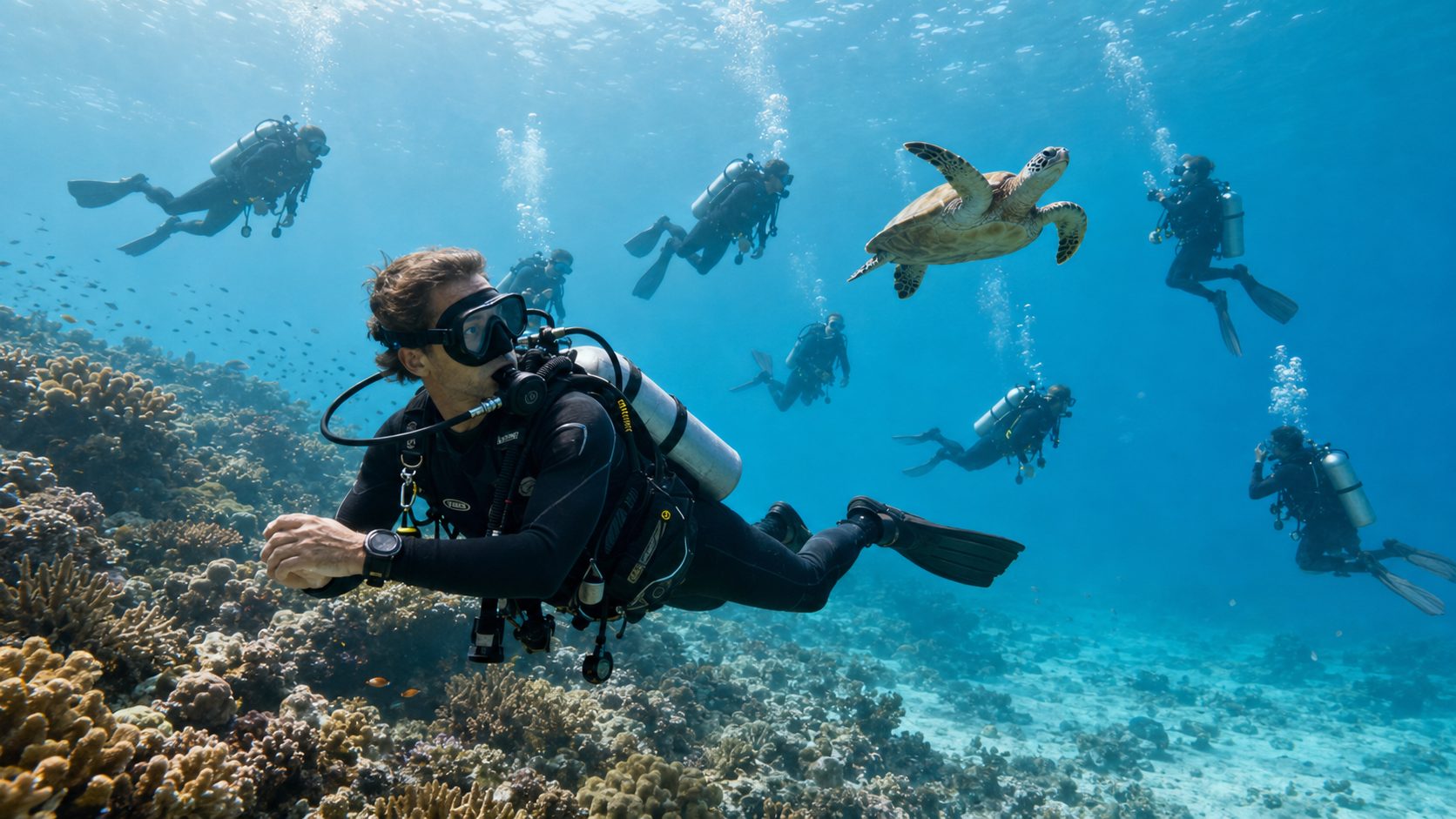
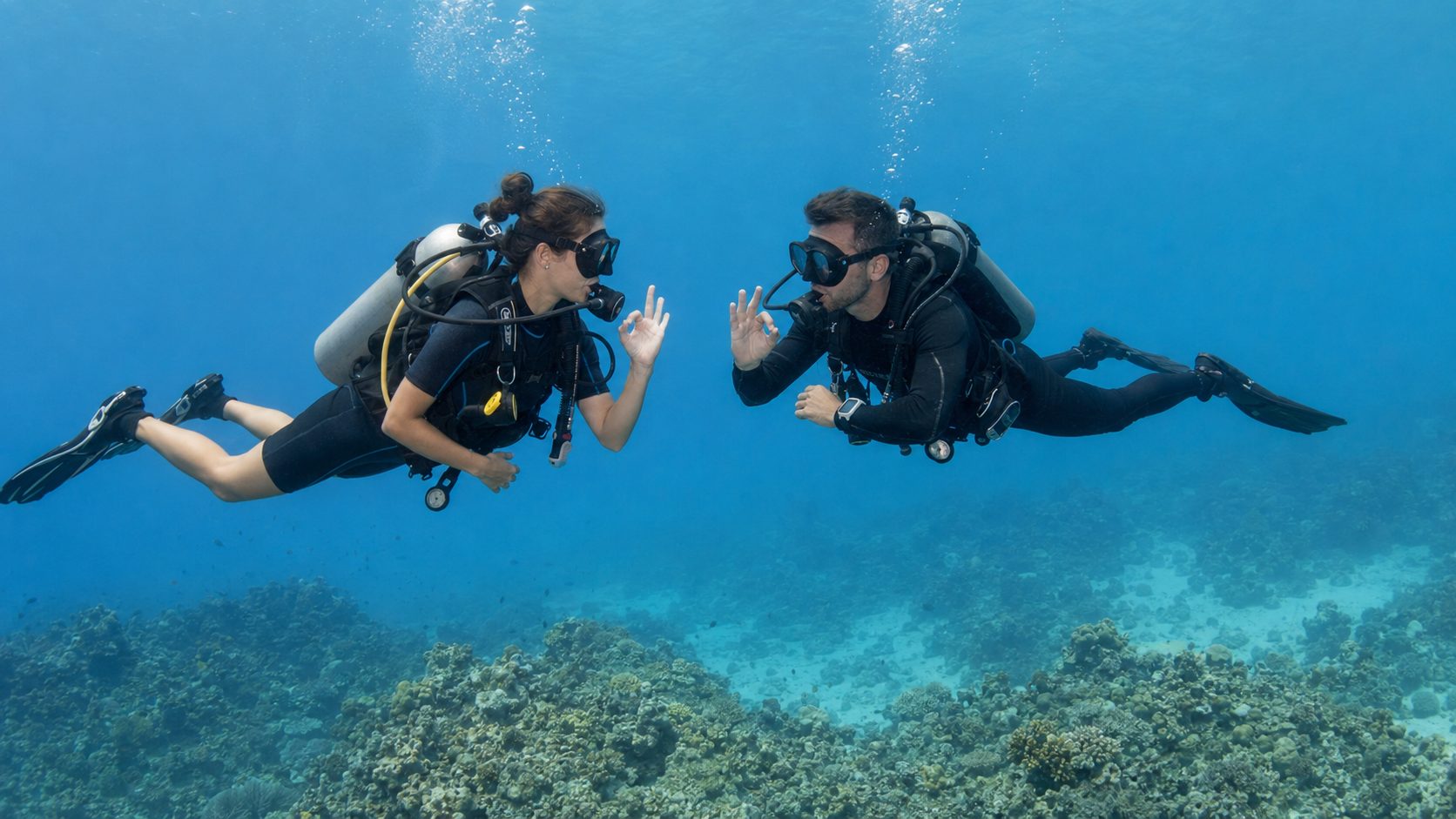
The buddy system becomes even more interesting during popular recreational dives in excellent visibility—for example, in the tropics—when several or perhaps a dozen divers swim along a reef, often a few metres apart, each feeling surrounded by an impressive team of potential rescuers. With so many people in the water, surely someone must be watching us, keeping track of our position and standing ready to respond at the first sign of trouble.
Except that the other divers are usually looking at the reef, the turtle or the shark, which is exactly where we are looking as well. In theory, we may therefore be able to count on assistance from a dozen people, but in practice one of them would first have to notice that a problem existed, look away from the attraction, work out which diver was missing, find them and still know what to do. Am I wrong? You only need to answer one question honestly: how many times have you seen someone lose the group?
The presence of many people in the water does not create a team, just as a dozen people waiting at a bus stop do not automatically become a rescue team when a traffic accident happens nearby. Without appropriate distance, communication, situational awareness and clearly defined responsibility, the “group” primarily provides psychological comfort, while the actual level of safety remains somewhat more theoretical.
Sometimes, then, what we are really observing is a collection of parallel solo dives that nobody planned as solo and nobody is willing to call by their proper name. The most hazardous solo dive is not always the one consciously planned and prepared as such; sometimes it is the dive described as a buddy dive simply because somewhere in the same part of the ocean there is another person who was introduced to us as our buddy before entering the water.
When assistance exists mainly in the plan
In some more advanced dives, the presence of a buddy may add further complexity to the entire operation, particularly when the available space restricts movement, the divers cannot remain sufficiently close to one another, and reaching someone who needs help, turning back for them or leaving the site together would be extremely difficult or even impossible. Under such conditions, the possibility of providing effective assistance may exist primarily in the dive plan, because the physical presence of another person does not necessarily mean that they will be able to do anything at the critical moment.
We can, of course, continue calling such a dive a team dive, because the name is usually the easiest part of the entire operation. A sound risk assessment, however, should consider the assistance a buddy can genuinely provide rather than the capabilities we would like to attribute to them. If, under the specific conditions of a dive, the buddy’s ability to respond is purely hypothetical, a consciously planned solo dive conducted by a properly trained, prepared and equipped diver may prove more reasonable than maintaining the appearance of a buddy system that has no realistic chance of functioning when a problem occurs.
This does not make solo diving automatically safe, nor does it mean that it should be the first choice. It simply means that the word “buddy” cannot replace risk assessment, and the presence of a second diver should not prevent us from asking whether, in a particular situation, that person will genuinely be capable of helping.
It is not about diving alone
The purpose of Solo Diver training is not to convince divers that a buddy has become unnecessary, because a good buddy can be enormously valuable, provided they genuinely function as one: they remain in contact, understand the plan, possess the necessary skills and can provide meaningful assistance when required. The mere presence of another person is not enough, particularly when they are too far away, cannot see the problem or do not know how to solve it.
The IDF Solo Diver course should not make divers feel braver about diving alone, but should instead remove the illusion that responsibility for their own safety can be transferred to someone else. This leads to a principle that may initially sound paradoxical: do not undertake a dive with a buddy that you would not be prepared to undertake alone. A buddy should provide an additional layer of safety, not serve as the argument that allows us to accept a plan exceeding our own competence, equipment capabilities or ability to manage a foreseeable failure.
This does not mean that every dive for which we are personally prepared should be conducted alone. It means that the presence of a buddy must not be used to justify a decision we would otherwise consider unreasonable. If the entire plan becomes safe only because we believe that the other person will certainly solve every problem that may arise, it is worth asking whether we truly have a plan or merely a reassuringly worded collection of wishes.
A self-reliant diver may choose to dive solo when the conditions, qualifications, equipment and a sound risk assessment allow it, but they will use the same skills far more often during an ordinary buddy dive. They will then become a better member of the team, because their buddy will receive the support of a capable, self-reliant diver rather than another person convinced that responsibility has somehow been divided—and conveniently diluted—by the simple act of entering the water together.
A consciously planned solo dive begins with accepting that we are responsible for ourselves. An unconscious solo dive—far more common and usually far less thoroughly prepared—begins with the comforting belief that, after all, we are not alone in the water.
CEO IDF
